

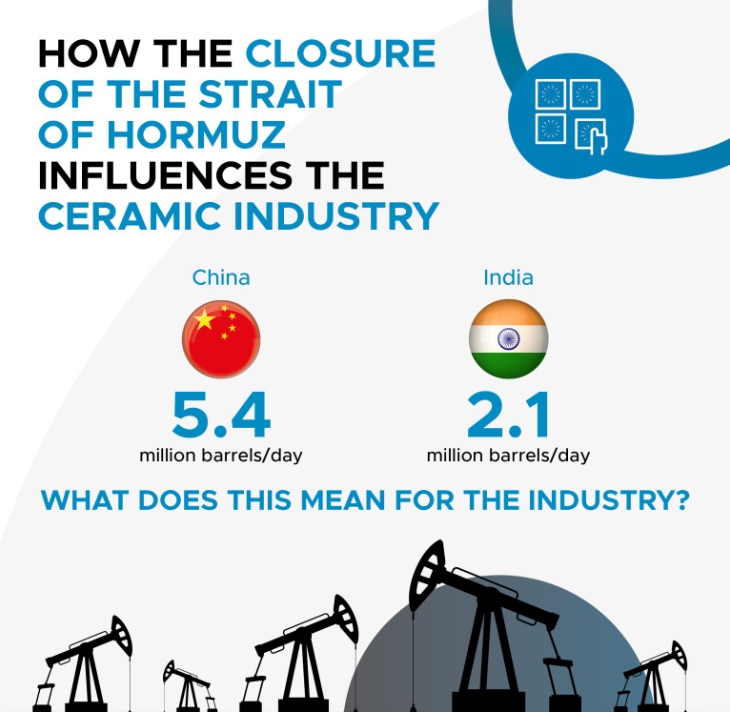
Energy is the backbone of every energy-intensive industry—and the ceramic sector is no exception. Understanding global energy dynamics is essential to anticipating shifts in production, pricing, and trade.
🛢️ The Strategic Importance of Global Energy Routes
A significant portion of the world’s oil supply passes through the Strait of Hormuz, making it one of the most critical chokepoints for global energy stability.
🌐 Ensures uninterrupted global oil supply
⚖️ Influences energy prices worldwide
🚢 Plays a vital role in international trade and logistics
📈 Directly impacts energy-dependent industries
🌏 China and India: Powerhouses of Energy Consumption
Major economies like China and India rely heavily on oil transported through this strategic route.
🇨🇳 China: 5.4 million barrels per day
Represents 49% of its total oil supply
🇮🇳 India: 2.1 million barrels per day
Represents 43% of its total oil supply
These figures highlight the critical dependence of both nations on stable energy flows.
🏭 Dominance in the Global Ceramic Tile Industry
Beyond energy imports, China and India are leaders in ceramic tile production.
🧱 Together, they account for 56% of global ceramic tile output
🔥 The ceramic industry is highly energy-intensive
📊 Energy costs directly influence:
Production efficiency
Global competitiveness
Export pricing and trade dynamics
📊 Turning Global Trends into Business Insights
With WPC Forecast, businesses gain access to continuously updated insights that connect global developments with industrial and market outcomes.
📡 Real-time data and forecasts
🌍 Clear understanding of geopolitical impacts
📈 Strategic decision-making support for stakeholders
✨ Final Thought
🔎 To understand the ceramic industry, you must first understand the world.